Betty Boop: Big Boss (1933)

About This Cartoon
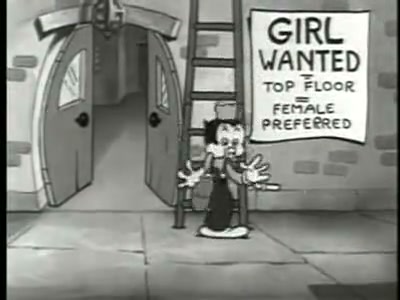
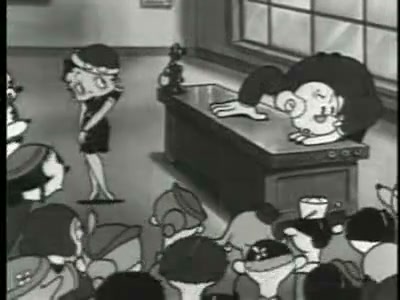
Betty Boop’s Big Boss is a 1933 Fleischer Studios short that blends musical charm with the studio’s signature surreal humor, following Betty as she applies for a job in a towering office building overseen by an eccentric and increasingly inappropriate employer. The cartoon opens with Betty responding to a “Girl Wanted” advertisement posted by an anthropomorphic pig, joining a crowd of applicants before being singled out for her upbeat personality and musical talent. Her new workplace initially seems promising, but the tone shifts as the boss’s behavior becomes overbearing, setting the stage for a story that mixes comedy with a subtle critique of workplace power dynamics. The animation showcases Fleischer Studios’ expressive black‑and‑white style, with fluid character motion, elastic transformations, and a rhythmic sense of timing that supports both the musical interludes and the escalating tension. Betty’s movements remain graceful and lively, emphasizing her optimism even as the situation becomes more chaotic. The boss, by contrast, is animated with exaggerated gestures and looming presence, heightening the comedic contrast between the two characters. The short’s humor leans on visual gags, inventive staging, and the studio’s trademark ability to stretch reality for comedic effect—most notably during the police intervention, where officers attempt increasingly absurd methods to reach Betty high above the city streets. Viewed today, Betty Boop’s Big Boss stands as a notable example of early 1930s animation navigating the shifting boundaries of acceptable content just before the Production Code tightened restrictions. The short reflects Fleischer Studios’ willingness to explore adult‑leaning themes through caricature and musical storytelling while still delivering the playful energy that made Betty Boop an icon. Its public domain status ensures continued accessibility, allowing modern audiences to appreciate its historical significance, its bold visual style, and its snapshot of a transitional moment in American animation. The cartoon remains a compelling blend of humor, personality, and social commentary, illustrating why Betty Boop endures as one of the medium’s most recognizable figures.
Metadata
- Title: Betty Boop: Big Boss
- Year: 1933
- Studio: Fleischer Studios
- Runtime: 6m 16s
Related Cartoons

Support the Archive
These links help support the site at no extra cost.
Search this cartoon on AmazonSearch this cartoon on eBay